
Blog post written by Mortgage and Protection Broker, Adam Wells of Lloyd Wells Mortgages (pictured right).

For most people, buying their first home can be a bit of a struggle, with a good income, a healthy deposit, and a bit of luck needed. Without the help of Parents, the ability to purchase a property is unattainable for some people. What happens if you have a good income and a good deposit, but you simply can’t afford to purchase a property where you currently live, but you definitely could afford to purchase a rental property elsewhere?

The Evening Standard recently reported that the average house price in London has risen from £482,576 to £509,935. If we round that to a slightly nicer £510,000, you would need at least a 5% deposit of £25,500 and an income of roughly £110,000 per annum to purchase this property.

If we compare this with Manchester, Rightmove states “The majority of sales in Manchester during the last year were semi-detached properties, selling for an average price of £261,852. Terraced properties sold for an average of £203,696, with flats fetching £195,563.”

Using the above figures underlines that buying in London is unattainable for most, but you might be able to buy property elsewhere at a more affordable price.

To answer the main question, can I purchase a buy-to-let as a first-time buyer? Yes, and it’s relatively easy too!

The main barrier is the ability to put down a deposit of 25%. For the Manchester flat of £195,000, that would be £48,750. Some buy to let lenders do have products available at 80% Loan to Value, but as a first-time deposit, you will need the 25% deposit.

Once you have saved up the deposit, which can come from your immediate family as a gift, the next hurdle is affordability.

Usually, a buy-to-let application is assessed on the rental income. As a bit of a rule of thumb, £600 per month rent would allow you to borrow £100,000, £900 per month would allow £150,000 and £1,200 per month would allow £200,000, etc.

For first-time buyers, the application will be assessed in a similar way to a residential mortgage.

Using the £195,000 flat in Manchester as an example, the mortgage required would be £146,250. We can use a term of 25 years in this example making a monthly rental income of £900.

The letting agent will take around 12%, which is £108.

The lenders will want to know about your income and expenditure.

If we use a gross annual income of £30,000, assuming you are completely debt-free, your own rental payments are £1,500 per month, then you would be able to borrow the £146,250 that you need.

Should I Have the Mortgage on a Repayment or Interest Only Basis?

This is completely up to you, and we suggest that you seek some financial advice around this. If you would like us to refer you to someone who can provide financial advice, just let us know. 

SWR Landlords Bristol Services

With a repayment mortgage, you are repaying the capital and interest. If your mortgage is over 25 years, you can guarantee that the mortgage will be repaid at the end of the 25 years. As this is an investment property, there will be capital gains tax to be paid when you declare the rental income on your annual tax return.

Using the same figures we have used above, a 5 year fixed rate will come in around 2.18% with a £995 fee. You will likely receive a free basic survey on the purchase too. Over 25 years, £146,250 comes in at £632.78 per month.

If you decide to proceed on an interest-only basis, the mortgage will remain at £146,250 and you won’t repay any capital. The benefit to this is that the monthly payments will be lower, but in 25 years you will be expected to sell the property to repay the debt. Using the same figure of 2.18%, the monthly payment will be £265.69 per month.

Which Product Should I Pick?

Mortgage providers usually offer fixed rates and variable rates. Fixed rates stay the same for the fixed-rate period of 2, 3, 5 years, etc. This offers the ability to budget and protect yourself from interest rate fluctuations.

Variable rates are historically cheaper but can become more expensive if rates start to rise. The Bank of England base rate is currently at a record low of 0.1% and due to this, the variable rates aren’t particularly attractive and as a first-time buyer, the banks are more comfortable with you taking a fixed rate. They are generally more generous if you take a 5-year fixed rate over the shorter 2 or 3 year fixed rates. That being said, we would go through your situation in detail and recommend the best product to suit your needs. This can depend on your attitude to risk, what your plans are for the property and how long you intend to keep the property.

Next Steps

We are happy to talk through all the options with you, find the right lender, and manage the process for you all the way through.If you are thinking about buying then do give us a call on 01174 520 330. Our initial conversations usually last around 15 minutes. Alternatively, you can email enquiry@lloydwellsmortgages.co.uk and let us know how we can help you.

We will discuss:

  • How much you can borrow
  • What that will cost
  • What fees can you expect
  • How Lloyd Wells Mortgages work
  • What insurances you will need
  • What documentation you will need to provide
  • Next steps

Your home may be repossessed if you do not keep up repayments on your mortgage.

Landlords from the UK who choose to live abroad can enjoy living their dream lives in another country while enjoying a steady income flow from their rental property. However, there exist some challenges you’ll face acting as a long-distance landlord. Difficulty communicating and the inability to meet tenants in person are just some of the challenges you may face. Also, if a tenancy ends while still abroad, landlords are left with the singular choice of asking someone else to carry out viewings for them.

For these reasons, landlords who live abroad prefer using a letting agency to manage their property while they live their lives undisturbed abroad. Are you an international landlord? Are you planning to become one soon?

This write-up will discuss some 4 tips to help make the letting process the easiest for you. Sit back, relax, and read on!

Get to Know Your Legal Responsibilities

All rental property owners in the UK are required to pay tax on the rental income. As an international landlord, you are no exception. The HM Revenue and Customs (HMRC) consider you a ‘non-resident landlord’ if you live out of the UK for 6 months or more in a year. However, this won’t be your case if you live outside the UK only temporarily, i.e. less than 6 months in a year.

You can pay your tax by taking out an essential tax rate from the rents or better still by using a Self-Assessment form for tax return. Payment can be done by a tenant or a letting agent. At the end of each year, the agent will provide you with a certificate. If you do not wish to do this, you will need to join the “Non-resident landlord (NRL) scheme. More information is available by clicking here.

Carry Out Screening through Skype

Meeting tenants one on one before accepting their rental application has proven to be one of the greatest challenges faced by landlords who live abroad. This of course won’t be a problem if you choose to use a letting agent. However, determining whether or not a tenant is the right person for your property without seeing them can be difficult. To help solve this problem, consider using Skype, Zoom, or any other video conferencing platform to discuss with tenants before deciding to accept or decline their rental application.

Give Priority to Long-Term Tenants

Administrative demands are higher for shorter tenancies than longer ones. Also, landlords are more likely to develop stronger bonds with long-term tenants. This helps take away much anxiety concerning how your property is being treated.  

Consider Using a Property Management Agency

The best and simplest way to avoid any headaches with regards to managing your property from abroad is to have someone else do it for you. Most landlords have found this to be the best way to live a stress-free life abroad.

A trustworthy and reputable property management agency like us (SWR) can bear the burden for you. We take care of everything from collecting rent from tenants to ensuring that you pay just the right amount of rental tax as you should normally pay.

When calculating the amount of tax payable, landlords normally offset their expenses against their gross rental income, leaving their taxable income or “profit”. The total profit combined with other income will allow them to be categorised into a tax band – Basic Rate (20%), Higher Rate (40%) or additional Rate (45%). Historically, mortgage interest could be included as an expense to reduce their taxable income, but this changed in April 2017, when a new system of tax relief began to be phased in.

The changes apply to all landlords who let residential property within the UK as an individual or a partnership. You will not be affected if you run your rental properties as a limited company so this could potentially be an option to explore although there may be implications with capital gains tax so we would recommend taking specialist tax advice.

From 6th April 2017, landlords are only able to offset 75% of their mortgage interest against their tax liability. This reduces to 50% from 6th April 2018, to 25% from 6th April 2019 and on 6th April 2020 you will no longer be able to offset any of their mortgage interest.

The old system of tax relief is being replaced by a new system of “tax credits”. A proportion of your mortgage interest will qualify for a 20% tax reduction:

From 6th April 2017 25% of your mortgage interest will qualify, from 6th April 2018 50% of your mortgage interest will qualify, from 6th April 2019 75% of your mortgage interest will qualify and from 6th April 2020 100% of your mortgage interest will qualify.

In basic terms, most landlords will be seeing their tax bill increase. Higher rate and additional rate taxpayers will pay more as the tax credit only refunds at the basic 20% rate, and basic rate taxpayers may be pushed into the higher rate tax bracket as they will be unable to set mortgage interest against income as an expense.

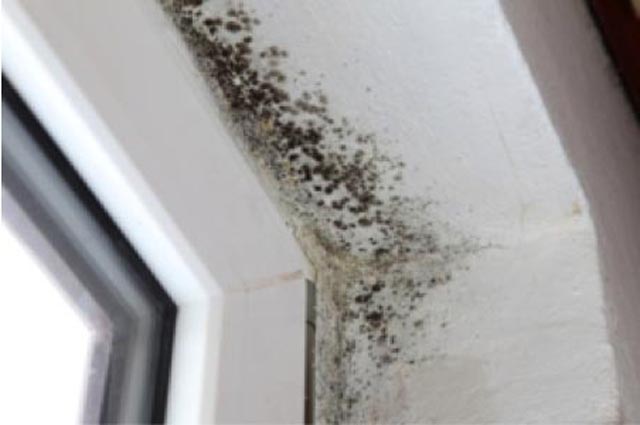
Condensation and mould are a regular problem within residential property and are often mistaken for a “damp” problem. We receive a significant number of reports of mould between the months of October and March – many more than throughout the warmer months of the year and tenants are often unaware that their own actions have caused the problem.

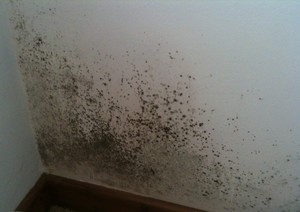
Are you experiencing condensation and mould on windows, window recesses, walls or ceilings? Are the window recesses, bathroom ceiling or corners of your rooms going mouldy?

If you are experiencing any of these issues, it is almost certainly not a defect with the property, rather a result of the way the property is being used. You as the tenant need to take urgent action to prevent the problem from worsening.

What is condensation?

Have you ever noticed droplets of water forming on the inside of your windows? This liquid is called condensation, and is caused by the relationship between the temperature outside and inside the property, and the amount of moisture in the air inside the property. When warm moist air makes contact with a surface that is colder than itself, it releases its moisture content on to the surface causing the formation of condensation. This will lead to mould if not dealt with immediately. This process can occur on all surfaces within a property such as walls, ceilings and woodwork.

Signs of condensation include:

  • Wet windows and walls
  • Black spot mould
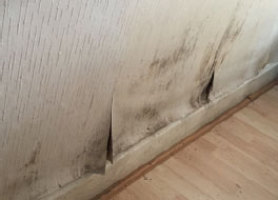
  • Wallpaper peeling
  • Musty smell

What is “Black Spot” Mould? (Aspergillus Niger)

Black spot mould is a direct result of a condensation problem within a property as is often confused with damp, which is a defect with the property and not a tenant responsibility. Black spot mould usually occurs in areas with poor ventilation or lack of air movement, like cupboards, corners of rooms or window recesses and is a direct result of a condensation problem. Black spot mould is dangerous because it can affect the health of those living in the property, in particular children and those with health conditions such as asthma, those who are immunocompromised or have other respiratory or pulmonary conditions. Mould spores are airborne and can quickly spread throughout the property.

How can you treat and manage condensation and black spot mould?

If you notice the signs of condensation in your property you can take various steps to reduce the problem.

  1. Ensure all extractor fans are working correctly
  2. Ensure the property is well ventilated by making use of window vents/opening windows
  3. Ensure tumble dryers are correctly vented if applicable
  4. Ensure the property is adequately heated
  5. Do not dry washing on radiators or airers around the property
  6. Wipe down any condensation when found
  7. Do not use calor gas heaters (or similar) within the property
  8. Spray any black spot mould with mould remover or mild bleach (using precautions as directed)

To Summarise:

Condensation and eventually black spot mould are caused by several factors:

  1. Too much moisture being produced within the property – incorrectly vented tumble driers, non-working extractor fans, drying of clothes on radiators and airers around the property
  2. Lack of ventilation in the property – not making use of window vents, not opening windows
  3. Inadequate heating in the property
  4. Lack of air circulation caused by accumulation of personal items within the property

If you are concerned that you have a problem developing within your property, please contact us as soon as possible and we can make a plan together to resolve your issue.

Images sourced from: 

https://www.envirovent.com/home-ventilation/stop-condensation-on-windows/

https://www.mtha.org.uk/for-tenants/damp-and-condensation/

https://www.envirovent.com/blog/keep-condensation-and-damp-out-this-winter/

https://www.timberwise.co.uk/2010/02/surveyors-fotofile-condensation-black-spot-mould/

https://www.completeremedialsolutions.co.uk/

The Homes (Fitness for Human Habitation) Bill has now made its journey through parliament and received Royal Assent, which means it is now a law. The bill makes it a requirement for a landlords to ensure that their property is “fit from human habitation” at the start of, and for the duration of the tenancy. This law will also apply to the communal areas within blocks of self contained units.

This new law amends the Landlord and Tenant Act 1984 and the Housing Act 2004 and gives the tenant stronger rights in terms of tackling a landlord who in unwilling to maintain or repair their property. It gives them a right to take their landlord to court t if the property does not comply with the Housing Health and Safety Rating System (HHSRS) and gives the court the facility to force the landlord to comply along with payment of damages to the tenant.

For those not aware of it, the HHSRS is a system used by local councils to identify risks within a property, a rate them in order of severity. Different risks are allocated a set number of points, and the final number of points dictates the “category” of hazard present – and the resulting action that must be taken.

The law is scheduled to come into force on the 20th March 2019 and will apply to all new tenancies created on or after this date. It will be rolled out to all tenancies on the 20th March 2020. It states that a property will be unfit for human habitation if there is a serious defect (Category 1 hazard) in any of the areas below. The Act states that “the house shall be regarded as unfit for human habitation if, and only if, it is so far defective in one or more of those matters that it is not reasonably suitable in that condition”

  • Repair
  • Stability
  • Freedom from damp
  • Internal arrangement
  • Natural lighting
  • Ventilation
  • Water supply
  • Drainage and sanitary conveniences; and
  • Facilities for preparation and cooking of food and for the disposal of waste water.

The landlord however, will not be responsible if the damage or issue has been caused by the tenant or an action of the tenant. There will also be some exemptions, for example:

  • Rebuild or reinstate a destroyed building
  • Put right unfitness the tenant is responsible for causing
  • Carry out works which are the responsibility of a superior landlord (freeholder), or for which they cannot obtain third-party consent

All of our managed properties are, and will always be maintained to a high standard so you can rest assured that as a client of SWR the implementation of this law will not affect you. The law should hopefully target those landlords who choose to ignore their obligations and exploit their tenants, however until we have case law to analyse, we cannot be sure of any unintended consequences for our own landlords who are always conscientious and take care of their properties and tenants.

Download more information on the HHSRS here.

Read the full bill here.

Unless you have been living without a TV, phone or radio, I expect you have now heard about the Tenant Fees Act 2019, aka the “Tenant Fee Ban” (TFB).

So, what is it?

In short terms, the TFB is a piece of legislation introduced by the government which came into force on 1st June 2019. It specifically prohibits landlords and agents taking any form of payment (or forcing tenants to contract with a third party) in order to obtain or continue an Assured Shorthold Tenancy Agreement, unless that payment is specifically permitted by the ban (a “permitted payment“). All other payments are known as “prohibited payments” and carry heavy penalties, as I will discuss later in this article.

The TFB applies to all AST’s and licences (not common law, company or high rent tenancies) granted on or after 1st June 2019 and all AST’s and licences from 1st June 2020.

What payments are permitted?

There are several, including:

Rent (but this must be kept at the same level, or higher, throughout the duration of the fixed term. If it is decreased, the additional amount during the months prior to the increase will be seen as a prohibited payment.

Security Deposit (This is now capped at 5 weeks rent, and not a penny over, regardless of circumstances i.e. pets. Deposit calculators are widely available online, and the the following calculation must be used: (Monthly rent x 12/52 x 5). This cap is increased to six weeks rent for properties with an annual rent of over £50,000.

Holding Deposit (there are many regulations around the acceptance of a holding deposit, which I may need to go into further detail on a separate post. However the main points are that it is capped at 1 weeks rent, and it must be returned to the tenant save for four explicitly stated sets of circumstances .)

Change of tenancy Charge (a charge can be made when the tenant requests a change to the tenancy, such as the addition of a permitted occupier, or the change of a rent date. This charge is capped at £50 including VAT).

Late Rent Charge (this is one is pretty laughable and likely not worth even thinking about. You cannot charge for late rents, chasing letters, visits. The only charge you can make is an interest charge of 3% over the BOE base rate, after the rent is more than 14 days late).

Replacement keys/security device (Self explanatory, but you can only charge the cost of the replacement key or device, not for your time.)

Early Termination (If the tenant would like to leave a contract early, you can charge to cover your costs. However, if you are not using an agent, you are not permitted to charge them for re-referencing the new replacement tenants. They are also expected to pay rent and utilities up until the day before a replacement tenant moves in).

Breach of tenancy (If the tenant breaches any part of the agreement, you can seek to recover your costs from them, either directly or through the security deposit).

What payments are prohibited?

Anything not listed above is prohibited.

What are the penalties for breaching the ban?

Luckily for us Bristol folk, the government helpfully decided to place the central UK enforcement authority for the Tenant Fees Act within Bristol city council. They are a team who will be able to enforce the ban through penalties, and make no mistake, after reading the government guidance written for enforcement authorities it is very clear that they are being pushed to enforce this legislation to the letter. The reasons for this may become clearer to you if you allow me explain a little further about the penalties for breaching the ban.

If you purposefully or accidentally take a prohibited payment and do not return it to the tenant within 28 days, if reported it is likely you will be given a penalty charge. Ignorance is sadly no excuse so it is important you are aware of your obligations.

Any breach would render a Section 21 eviction notice invalid, so you would not be able to regain possession of your property until the prohibited payment was returned.

First breach: Up to £5000 penalty charge per breach (note: if you charge one fee that includes several items i.e. referencing, check in, tenancy fee: this could easily be seen as multiple breaches which would each attract a penalty charge in its own right).

Second or subsequent breach within 5 years: Criminal offence, or a penalty charge of up to £30,000 as an alternative to prosecution, per breach.

Common Errors

There are many people that believe the TFB only applies to letting agents, however this could not be further from the truth. As a self-managing landlord, here are a couple of scenarios which could easily catch you out if you are not making sure you are fully up to date with your obligations.

  • Your tenant is on a six month AST which renews on the 1st August 2019. You currently hold six weeks deposit. At their request, you supply another six month agreement as you normally do, and as the deposit is held in a custodial scheme, no action is needed.

WRONG. Prior to signing the new fixed term agreement (and effectively creating a new tenancy, you MUST return the portion of the deposit that is over the five week deposit cap. If you do not do this, that money will become a prohibited payment and you will be in breach.

  • You are advertising your property to rent as no pets, but someone phones and offers to pay a separate payment as protection against pet damage. This is fine, because it technically isn’t part of the security deposit.

WRONG. You must not take any money over the five weeks rent as a security deposit. In this scenario, not only would you be in breach of the TFB, but you would also be in breach of the Tenancy Deposit Protection Legislation.

  • You are advertising your property to rent as no pets, but someone phones and offers to sign a contract that states they will have the property and carpets professionally cleaned and flea treated at the end of the tenancy. You agree to the tenancy on those terms.

WRONG. You must not make or allow the tenant to contract with a third party (that costs them money) as a condition of granting a tenancy. In this instance, the fact that they must pay for cleaning and flea treatment in order to have the tenancy would be a breach.

  • Your tenant calls you at 10pm to say they have locked themselves out as they have lost their keys. You visit the property to let them in and provide them with a spare, and they give you £20 for your trouble.

WRONG. You are not able to charge for your time when resolving issues like this. You are only able to charge them the cost of the key. Our advice in this situation would be to either ask them to come to you to collect the key, or for them to call a locksmith who they would need to pay directly.

As you can see, the TFB was created as a piece of legislation to protect tenants from unscrupulous landlords and letting agents. I am the first to acknowledge that historically there has been a huge amount of unfair treatment of tenants, particularly from city centre Letting Agents across the country. However, the way this legislation has been written goes above and beyond the job it was meant to do.

It is so convoluted and technical that it makes it difficult for the non-professional landlord to stay compliant without expert support. It is full of opportunities for mistakes, and this coupled with widespread ignorance around the true implications and requirements of the Act means I am expecting to see a large amount of prosecutions over the next few years.

That said, any piece of legislation is subject to interpretation and until we have case law coming through giving us better more conclusive guidance on how to interpret the Act, we all just need to keep our fingers crossed that doing our due diligence is enough to comply and ensure that we aren’t one of the unfortunate few who are involved in creating that case law that everyone else is awaiting to enable them to learn from.

As always, I hope this information was useful, and if you have any questions feel free to post them below. Please make a point of reading our disclaimer located on the privacy page of this website.

It has come to our attention that since the 31st May 2019 there has actually been two minor changes to the Government “How to Rent” guides.

This guide must be given, by law, to all new tenants prior to their occupation and in the Deregulation Act of 2015 it is clearly stated that it must be the most ‘recently updated’ version.

Permitted Payments you may be charged:

Holding fee of one weeks’ rent

One months’ rent in advance

Five weeks’ rent as a security deposit or six weeks’ rent if the rent is above £50,000 per annum.

A reasonable charge for loss of keys/security device during tenancy

An interest charge for late rent of 3% above the Bank of England base rate for each day the amount is outstanding, when the rent is outstanding for at least 14 days

A reasonable cost for contractual damages under the Assured Shorthold Tenancy Agreement

A reasonable charge will apply for changes to the tenancy agreement or a change of sharers.

Charges will apply for the early termination of a fixed term agreement.

We are registered with The Property Ombudsman and our membership number is L00493

We are registered with the ARLA Propertymark Client Money Protection Scheme and our membership number is C0123573

There is a lot of discussion around asbestos, particularly in recent years where Health & Safety has been pushed to the forefront of our minds – but what actually IS asbestos and why do we, as property managers and landlords, need to know about it?

All landlords and property managers must abide by the Health and Safety at Work Act 1974, hence they must be aware of anything that may impact the general health and safety of their tenants.

Asbestos was known as the “Magic Mineral” for many years given its versatility and properties as a construction product. It was used in many ways such as insulation, fire proofing, cladding, even roofing and floor tiles. It wasn’t until much later that the effects of asbestos on those who produced, shipped and used it became apparent. Unfortunately by this point, asbestos was so widely distributed and used that it was impossible to trace it and remove it from those buildings that had included it.

So WHY is Asbestos dangerous?

Asbestos is made of fibres, as you will see below. When the Asbestos is “friable”, meaning the edges are damaged or worn, these fibres can be released into the air, and inhaled or ingested. Once ingested or inhaled, they are difficult (if not impossible) to remove, and eventually cause disease, such as lung cancer or conditions known as Asbestosis and Mesothelioma.

What does Asbestos look like?

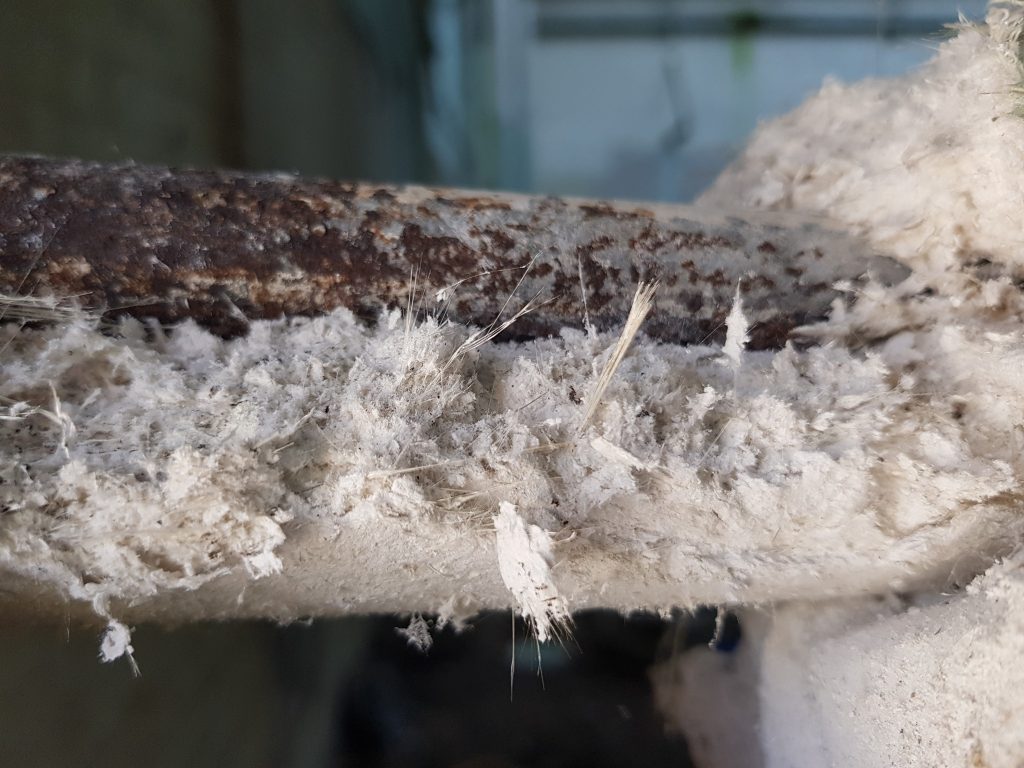
To keep things simple, there were three main types of Asbestos in use in this country – these are nicknamed after their appearance: “White Asbestos” (Chrysotile), “Blue Asbestos” (Crocidolite) and “Brown Asbestos” (Amosite).

Image courtesy of: https://www.merryhillenvirotec.com/types-of-asbestos/

The use of Blue and Brown Asbestos was banned in the UK in 1985 but large amounts remain. Blue is widely seen as the most dangerous type of asbestos due to its structure – the fibres are short and spiky, which cause the maximum damage to the lungs.
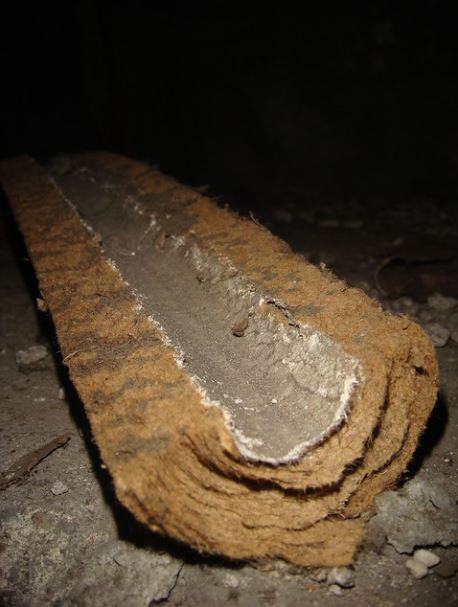
Blue asbestos was often used for products such as spray on pipe lagging, insulation or asbestos cement.

Image Courtesty of: https://www.ad-asbestosremoval.co.uk/

Just as a matter of interest, a lot of people think that the visible fibres of asbestos are what cause the problem. In fact, it is actually the fibres you can’t see with the naked eye that are more troublesome, as shown by this micrograph:

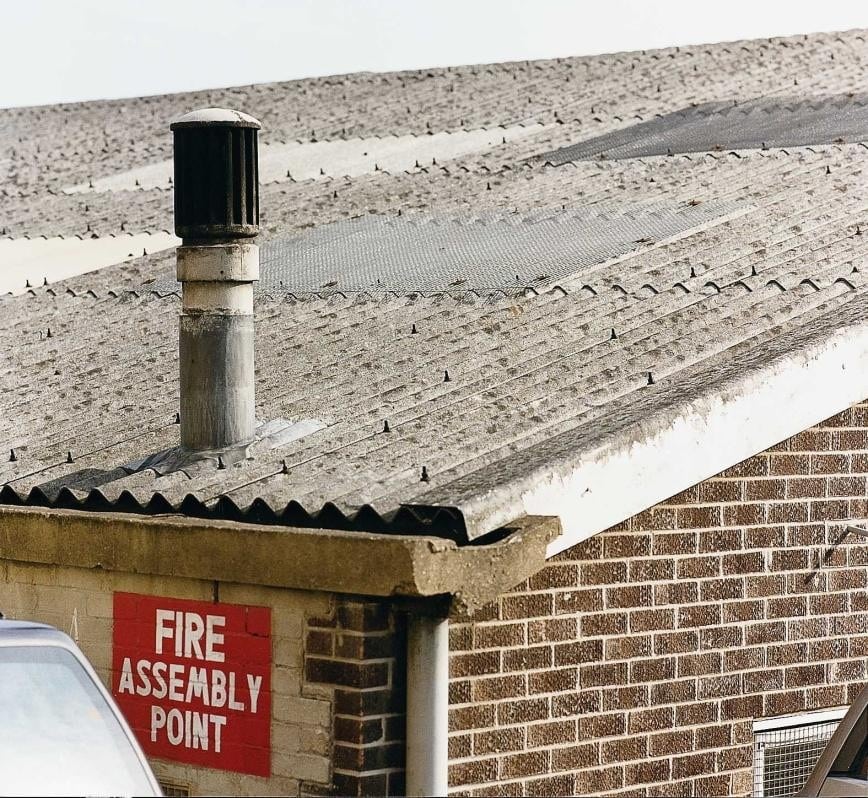
Similar to Blue asbestos, Brown asbestos was mostly used for cement sheets and insulation.

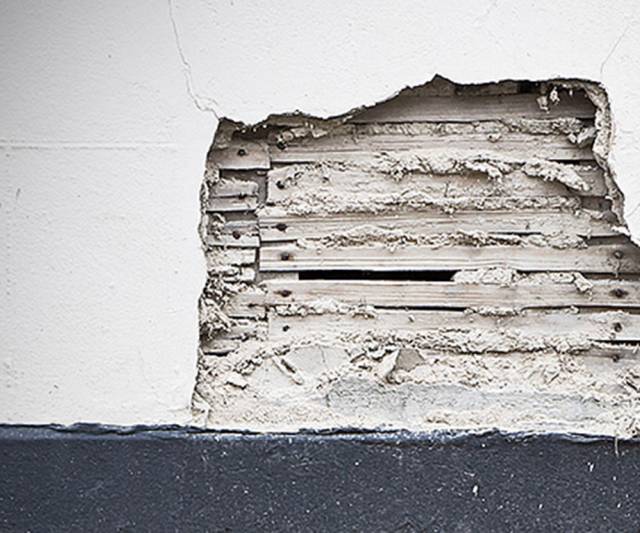
The most common type of asbestos, white, was banned in 1999 which means as a landlord or property manager you should be aware that it may be present in most properties built or converted before 2000. White asbestos is commonly found in areas like artex ceilings, insulation, cement, soffits, piping, fireproofing and ceilings but is so widespread the uses of this type of asbestos would take too long to thoroughly list.

Image courtesy of: https://job-prices.co.uk/asbestos-in-the-home/

How can I tell it is asbestos?

To only way to confirm the prescence of asbestos is by testing it. There are many companies that will offer a sampling and testing service, often with a 24 hour turnaround. They will take a look at the sample under a microscope to identify the type of fibres it contains, and therefore confirm the presence of asbestos in the sample.

What do I do if I have asbestos?

The first step in the sucessful management of asbestos is the identification of the location and type of asbestos, and the assessment of the current condition.
We would always recommend using a professional company to carry out an “Asbestos Management Survey” and if necessary, an “Asbestos Management Plan and Asbestos Register”.
This survey will review the property non-invasively to identify the location of asbestos on site, as well as giving recommendations for its management and/or removal.
Should there be extensive works being carried out at the property, it is important to take this further and arrange for a “Refurbishment/Demolition Survey” which is much more invasive.

Both types of survey will provide information on how to manage the asbestos, which is likely to be either complete removal, encapsulation (covering to prevent the release of fibres) or regular checking of the condition.

If you would like further information, the Health and Safety Executive website is a fantastic resource, in particular the booklet titled “Asbestos Essentials“.

References:

https://www.hse.gov.uk/asbestos/

https://ibasecretariat.org/lka-paper-asbestos-from-magic-mineral-to-killer-dust-apr-28-2013.pdf

https://ehs.oregonstate.edu/asb-when

https://ehs.oregonstate.edu/asb-when

Flats, Houses & Homes to rent in Bristol - South West Relo

SWR can help you find a property that is best for you - whether you are looking for Homes, houses, or flats to rent in Bristol.

For flats, houses &  homes to rent, Bristol has a great selection. SWR is a well-established, professional letting agency with the most extensive selection of quality properties to rent in Bristol.

Finding a place to live can be a stressful task, especially in a big city like Bristol. SWR can help you find out which property is the best for you whether you are looking for houses to rent Bristol or flats to rent Bristol we are here to offer the most comprehensive and personalised and “stress-free” services. SWR is here to listen to your requirements and we take pride in providing outstanding customer service. We want to help you find your next home and we’ll guide you through the process so that the experience is enjoyable and exciting.